
Tokyo & Kyoto: Japan First Trip Guide
This Tokyo and Kyoto guide for a first trip to Japan covers the two cities every first-timer should see: Tokyo, the largest city on earth, a neon forest of skyscrapers, temples and food; and Kyoto, the old imperial capital, a city of seventeen centuries of shrines, gardens and wooden lanes. They sit about 450 kilometres apart, linked by the Shinkansen bullet train in two hours and fifteen minutes
Kyoto first: Fushimi Inari and the thousand vermilion gates
Kyoto has more than sixteen hundred temples and shrines, and the one to see first is Fushimi Inari Taisha, the shrine of the god of rice and prosperity, famous for its tunnels of vermilion torii gates. Around ten thousand gates climb the wooded hillside behind the shrine, each one donated by a business or a family, and the path through them is one of the great walks in Japan. Go early in the morning, before the crowds arrive, and climb past the first crowded stretch: after twenty minutes the path thins out, the light filters through the gates, and the shrine becomes a quiet mountain walk with views back over the city. Take water and wear comfortable shoes.

The vermilion torii gates of Fushimi Inari Taisha, Kyoto. Photo: Wikimedia Commons.
Kiyomizu-dera, Gion and old Kyoto
Kiyomizu-dera, the Pure Water Temple, is Kyoto's most famous temple, a wooden stage built out over a hillside in the eighth century, rebuilt in the seventeenth, and now a UNESCO World Heritage Site. The stage, held up by wooden pillars without a single nail, looks out over a valley of maple trees, and the view is at its best in the cherry blossom season of late March and early April, and again in the autumn colours of November. The streets leading up to the temple, Sannenzaka and Ninenzaka, are preserved lanes of wooden townhouses, tea shops and craft stores, and they are the best place in Kyoto to feel the old city. In the evening, walk the lanes of Gion, the old entertainment district, where wooden teahouses line narrow streets. For more on planning a first trip abroad, see our Planning Your International Holiday guide.
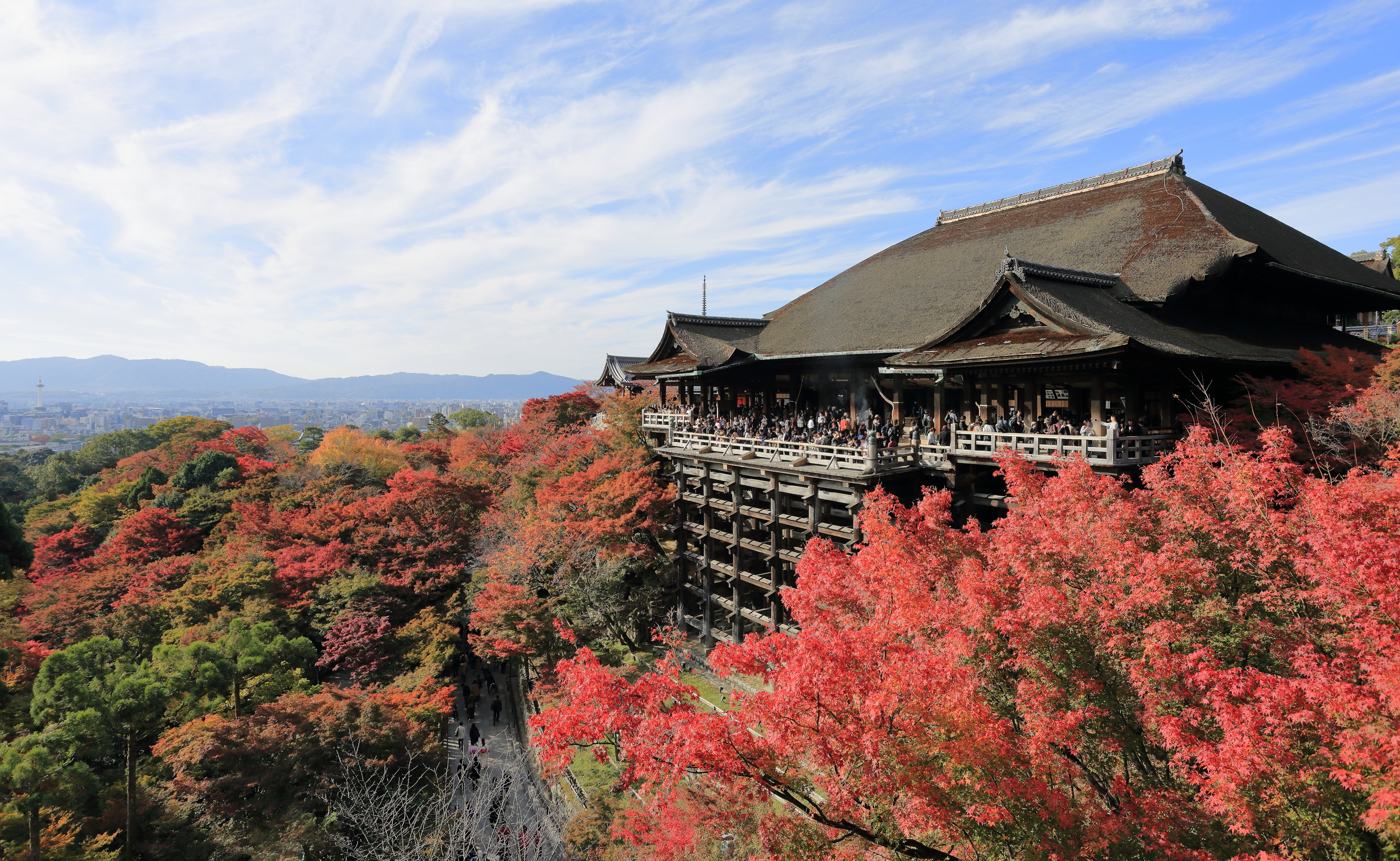
Kiyomizu-dera, the Pure Water Temple, in Kyoto. Photo: Wikimedia Commons.
The Shinkansen: two hours between two worlds
The journey between Kyoto and Tokyo is part of the experience. The Tokaido Shinkansen, the world's first high-speed railway, opened in 1964, and its fastest service, the Nozomi, covers the route in about two hours and fifteen minutes, with trains departing every few minutes at peak times. The trains are quiet, punctual to the second, and comfortable, with wide seats, large windows and food trolleys, and the right-hand seats on the Tokyo-bound journey offer views of Mount Fuji on a clear day, about forty minutes out of Tokyo. The slower Hikari and Kodama services stop at more stations and take longer, but they are covered by the Japan Rail Pass, while the Nozomi needs a supplement.

Mount Fuji seen from Arakurayama Sengen Park. Photo: Wikimedia Commons.
Tokyo: Senso-ji, Asakusa and the old city
Tokyo's oldest temple is Senso-ji in Asakusa, founded in the seventh century and dedicated to the goddess Kannon. The great red lantern of the Kaminarimon Gate marks the entrance, and the Nakamise shopping street leads from the gate to the temple, lined with stalls selling snacks, souvenirs and traditional crafts. The temple itself is a great hall of incense and prayer, and the five-storey pagoda beside it is the second tallest in Japan. Come early in the morning or in the evening, when the temple is floodlit and the crowds have gone. Asakusa is the old downtown of Tokyo, and it rewards a slow half-day: the river walk along the Sumida, the view of the Tokyo Skytree across the water, and the small restaurants of the back streets. The Skytree, at 634 metres, is the tallest structure in Japan, and its observation decks give a view over the whole city on a clear day.

Senso-ji Temple in Asakusa, Tokyo. Photo: Wikimedia Commons.
Shibuya, Shinjuku and the neon city
Shibuya Crossing, the scramble crossing in front of Shibuya Station, is the most famous intersection in the world, where thousands of people cross from all directions at every green light, under walls of neon and giant screens. Watch it from the second-floor windows of the station building or a nearby café, then cross it yourself, and you will have felt the pulse of the city. Shinjuku, to the north, is the city at its most vertical: the Tokyo Metropolitan Government Building has free observation decks on the 45th floor, the Golden Gai lanes hold two hundred tiny bars in six narrow alleys, and the Kabukicho district glows with neon until dawn. For calm, walk west to the Meiji Shrine, set in a forest in the middle of the city. If you enjoy island and city guides in this style, our Bali travel guide covers another favourite Asian destination the same way.

Mount Fuji at sunset. Photo: Wikimedia Commons.
When to go, visas and practical tips
- Best seasons: Late March to early April brings the cherry blossom, when the parks and temple grounds turn pink and the whole country celebrates hanami, the viewing of the blossoms. November brings the autumn colours, especially in Kyoto's temples, and the weather is cool and clear. Summer is hot and humid; winter is cold but bright, with fewer crowds.
- Visa: Japan has its own visa requirements for Pakistani passport holders, which change from time to time, so check the current requirements before you travel. Message us on WhatsApp and we will walk you through the latest guidance.
- Getting around: The trains and subways are the best in the world — punctual, clean and frequent. Buy an IC card such as Suica or Pasmo, tap in and out, and top it up at any station. Station signs are in English.
- Food: Halal restaurants are growing in both cities, especially around Asakusa and Shinjuku in Tokyo, and near Kyoto Station, and many ramen and curry shops now label halal options.
- Money: The currency is the yen, and cash is still important in Japan — small shops, temples and rural stations often take cash only, so carry yen alongside your card.
- Etiquette: Bow slightly when greeting, remove shoes where asked, keep your voice down on trains, and do not eat while walking.
- Days needed: Three days in Kyoto and three in Tokyo is a good first trip, with a day trip to Nara, the old capital of deer and temples, or to Mount Fuji if the weather is clear.
Plan your Japan trip
Japan rewards the traveller who plans the big things and leaves the small things open. Book the Shinkansen seats, choose the season, and then let the cities do the rest: the gates of Fushimi Inari at dawn, the stage of Kiyomizu-dera over the maples, the lanterns of Asakusa, and the scramble of Shibuya at night. Two cities, two thousand years of history, and a journey between them that is worth the trip alone.
Plan your trip with Travelia Planet
Want help planning a Tokyo & Kyoto trip? Message us on WhatsApp at +92 310 3996056, email contact@traveliaplanet.com, or visit traveliaplanet.com. Our office is at Allied Bank Building, Canal View Society, Lahore, Pakistan 54000. Open Monday to Saturday, 9 AM to 9 PM.
Comments
Post a Comment